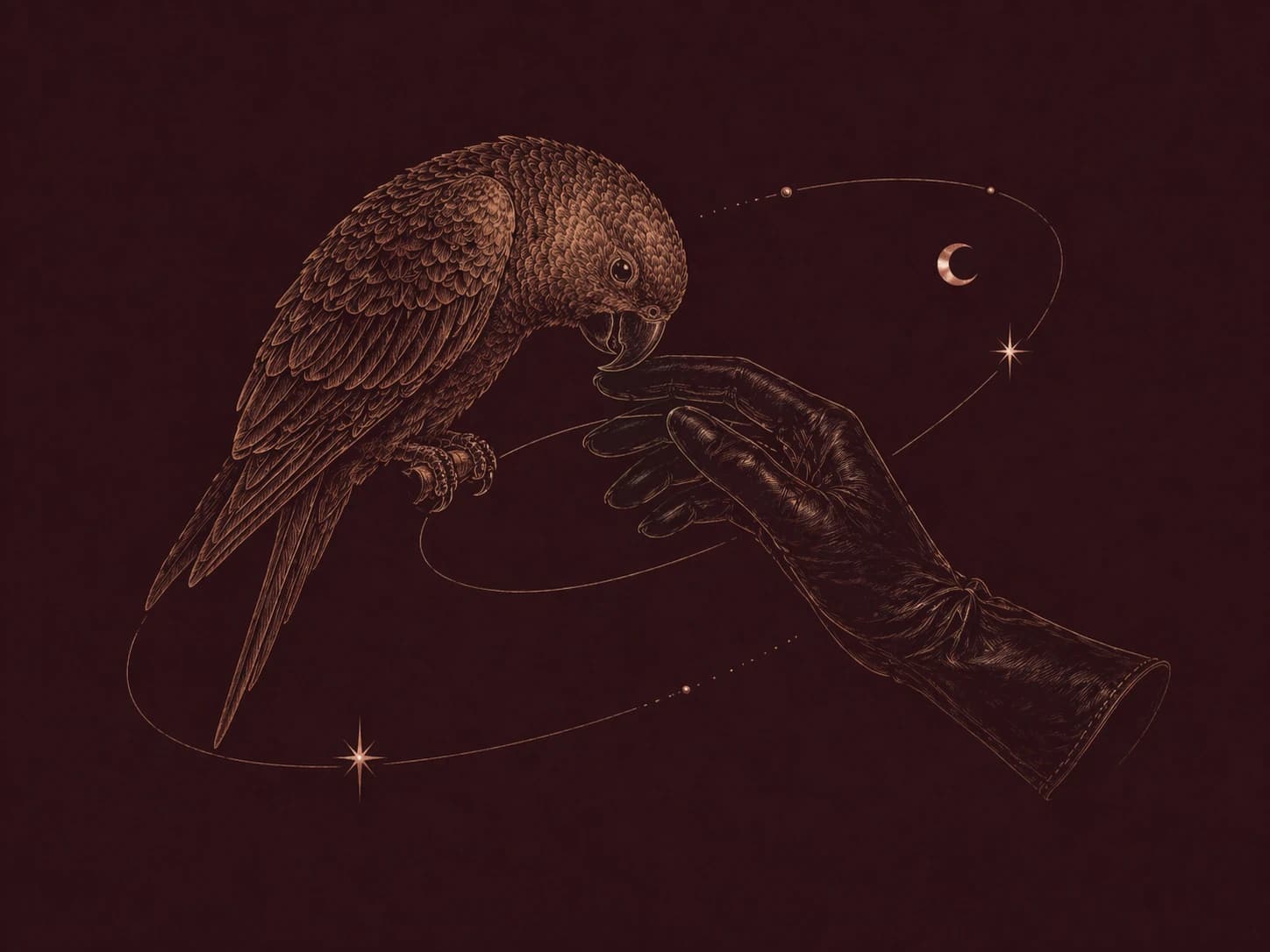
Most of the questions beginners bring to impact play are dressed up as intensity questions and they’re really skill questions. “How hard can I hit my partner?” “Is it supposed to leave bruises like that?” “Why did my paddle scene feel flat?” The answers sound like they're about force. They aren't. They’re about a craft with a learnable skill stack, and the intensity just happens to be the part that makes it look dramatic.
The better frame: impact play is closer to a percussive instrument or a martial-arts drill than it is to a sex act. You’re learning to produce specific sensations, reliably, on a body you’re reading in real time, using tools with distinct characters. The way you get good is the way people get good at any physical craft — start smaller than feels exciting, drill the fundamentals, add tools only after the earlier tiers are genuinely fluent, and respect the anatomy that punishes shortcuts.
This piece walks the 101 version of that. What impact play actually is, the skill stack you’re learning, the common tools in the order people reasonably learn them, the body-map safety rules (with named anatomy and named injury risks), aftercare specific to impact, and how the negotiation conversation goes before a first scene. It isn’t a substitute for hands-on instruction or an in-person class. It’s the ground frame under both.
What impact play actually is
Impact play is the intentional, negotiated application of impact to a partner’s body, using the hand or an implement, for some combination of sensation, power-exchange scene-building, and the specific kind of release that comes from sustained physical intensity. The “negotiated” and “intentional” words are doing most of the work in that definition. Impact that isn’t negotiated isn't impact play — it’s something else the law has names for.
What draws people to it varies. Some bottoms describe the pull as the endorphin / flow-state response, others as the specific feeling of surrendering into trusted overwhelm, others as a containment experience where the external force lets internal noise quiet down. Tops describe a different mix: presence, reading, the satisfaction of a well-landed scene, and for some the pull of producing a specific response in a specific person. Neither side’s experience is the “real” reason; the craft has room for both, and good scenes usually involve both.
Impact play sits inside the wider container of BDSM. If you’re new to the whole landscape and looking for how impact relates to the rest, the BDSM explainer is the piece that frames the map. Impact is one specific practice; the same principles about consent, negotiation, and aftercare apply across all of them.
The skill stack: what you’re actually learning
Five skills, more or less in the order they matter. If you’re thinking about getting into impact, the most useful thing you can do is recognize which of these you currently have and which you don’t.
- 01Reading the body. The most important skill, and the one beginners skip. Before strike-technique matters, you need to be able to read breath rate, muscle tension, shoulder posture, eye focus, and skin color. A scene that is going well and a scene that is about to go wrong look noticeably different if you’re watching; neither looks dramatic. Practitioners call this “presence,” and it’s trainable, but only by paying attention on purpose during lower-intensity scenes first.
- 02Warming up tissue. Skin and muscle at rest cannot take the impact that skin and muscle after ten minutes of light warm-up can. This isn’t optional. Starting a scene with a hard strike on cold tissue is the most common preventable injury in impact play. The warm-up looks like steadily escalating hand contact — light, then firmer, then light strikes — over several minutes before any implement comes out. The warm-up is itself part of the scene, not a boring pre-phase.
- 03Accuracy. Hitting the exact six-inch target you meant to hit, from any angle, at variable force. Most beginners think they are accurate; video or a coach proves they aren’t. Accuracy is what separates a scene that stays in safe zones from one that strays into the kidney area by accident. Practice on a pillow or a firm target before practicing on a person. Every experienced top has spent hours doing exactly this.
- 04Calibration and the escalation curve. Knowing what force level you’re delivering, and being able to move up and down that curve deliberately. Beginners tend to have two levels — too soft and too hard — with nothing in between. Calibration is learning to reliably produce, say, a level-3 strike when you want a level-3. The escalation curve is how you climb across the scene: not a straight line, but a series of small plateaus with drops. Monotone intensity is flat and tiring; calibrated curves are what make long scenes work.
- 05Reading your own state. Tops drop too. Adrenaline, arousal, and the rhythm of a scene can pull a top past their own good judgment — this is a real phenomenon, not a moral failing. Knowing when to pause, when to switch tools, and when to end a scene that’s still “going well” is part of the skill. The top who stops a scene five minutes earlier than needed is doing better work than the top who keeps going because the bottom hasn’t safeworded.
Notice that “hit harder” isn't on this list. Force is an output of skills; it isn’t itself a skill. Tops who chase force first end up with a narrow range (only hard, only soft) and struggle with the scenes that require the middle. Jay Wiseman’s SM 101 and Dossie Easton and Janet Hardy’s The New Topping Book both put skill and presence ahead of intensity in exactly this way, and those books have aged well on this point.
The best impact tops spend most of their attention reading the body, not producing force. Force is easy; reading is what’s trainable, and what makes a scene good.
The common tools, ranked by learning difficulty
This list is ordered by how forgiving the tool is for a beginner, not by how intense it can get. Every tool can produce a full scene in skilled hands; the difference is how fast mistakes turn into injuries. Work up the list, not down it.
- 01Hand (easiest to learn, hardest to master). Every top starts here, and many stay here. The hand teaches calibration, accuracy, and reading response because every strike has immediate sensory feedback through your own skin. The hand’s natural give and the instant feedback loop make it the safest tool in the beginner phase. Its limits are range of sensation and reach. You can do deeply satisfying full scenes with nothing but a hand, and you should run several dozen such scenes before moving up.
- 02Soft paddle or light flogger. The first implement. A soft leather paddle or a light-weight suede flogger extends the hand vocabulary without adding much new risk — forgiving surfaces, broad contact area, minimal sting concentration. You’re still mostly hitting what you could hit with a hand; the point is getting used to tool-mediated contact: different weight, different timing, different grip. Expect to discover your accuracy is worse with a tool than with a hand; that’s normal and trainable.
- 03Heavier flogger. Floggers scale widely. A heavier flogger produces a thuddy, deeper sensation very different from a paddle’s sting. Flogging technique is its own sub-craft — arc, wrap, and recovery. Wrap (tails curling around the body into unintended zones) is the main hazard and takes practice to prevent. Most practitioners spend months with a medium flogger before moving to anything heavier. Classes are genuinely useful at this level; YouTube alone isn’t enough.
- 04Hard paddle. A hard leather or wood paddle delivers concentrated force to a smaller area. The margin for error shrinks: a hand-strike off-target is usually fine, a hard-paddle strike off-target can cause real injury. Hard paddles belong after hand and soft-implement fluency is genuinely there, not as a third-session tool. The crossover from “fun sting” to “bone-contact risk” happens fast; you want to be sure you have the accuracy to stay on muscle.
- 05Cane. Intense stimulus, high concentration, narrow safety margin, distinctive aftermath (stripes, sometimes broken skin). Canes are not beginner tools. Most experienced practitioners recommend one to two years of consistent impact practice before picking up a cane at all, and many suggest in-person instruction the first time. Cane work also requires its own set of aftercare knowledge — welts, broken skin, blood draw — that isn’t needed for the lighter tiers.
- 06Single-tail and whip. The deep end. High skill ceiling, high injury potential, essentially requires formal instruction. If you’re reading a 101 explainer, single-tails are not the next purchase. They’re listed here only so the progression is complete: a real single-tail top has usually spent five-plus years working up, with coached practice and a lot of solo target work before ever using the tool on a person.
A pattern: serious practitioners spend longer at each tier than beginners expect. The person who ran hand-only scenes for six months before buying a first paddle is the person whose paddle scenes land well immediately. The person who bought the whole starter kit day one usually ends up with a drawer of tools they don’t actually know how to use.
Harm reduction: the body map and named risks
This is the non-optional section. Impact play is one of the practices where specific anatomical knowledge prevents specific injuries, and where skipping the knowledge doesn’t get punished often enough to keep beginners careful. The rules below are the ones every experienced practitioner treats as load-bearing; nothing here is advanced, and all of it should be fluent before a first implement-based scene.
- 01Safe zones (target these). The large, well-padded muscle groups take impact reliably: glutes, back of thighs, upper back (below the shoulder blades, above the ribs, and only across the meaty area — not the spine). These zones have enough muscle depth to absorb force without risking underlying organs or bone. Most of a responsible impact scene stays inside these areas. The top should be able to name which zone they are in at every moment of the scene.
- 02No-go zones (never strike with an implement). The kidney area (the small-of-the-back region on either side of the spine), the spine itself, the tailbone, the neck, the face, the joints (elbows, knees, shoulder joint), the side ribs (below armpit), and the kneecaps. Impact to the kidney area risks deep tissue damage and genuine medical emergencies. Impact to the spine or tailbone risks nerve injury. Impact to joints can cause lasting damage that isn’t obvious in the moment. These are not “careful zones” — they’re full stops. Learn the anatomy before the tool.
- 03Nerve damage (can happen to skilled tops too). Peripheral nerves run through specific paths; strikes that repeatedly land near nerve bundles can produce tingling, numbness, or reduced function downstream. Common mechanism: repeated strikes to the same area of the lower buttock / top of thigh, or to the sciatic-nerve-adjacent zone. Rotate target zones within a scene. If the bottom reports tingling or numbness during or after, the scene is over for today and a medical opinion is worth getting. Most nerve injuries resolve; some don’t.
- 04Deep tissue injury (the one you can miss). Concentrated strikes to the same area can produce hematoma deep enough to not show as dramatic bruising on the surface, but significant enough to cause pain, swelling, and in rare cases complications that need medical attention. Signs to watch for in the 24–48 hours after a scene: worsening pain (rather than the usual fading soreness), swelling that grows, discoloration spreading, fever, or blood in urine after a strike that landed near kidneys. Any of these is a doctor visit, not a “let’s see how it goes”.
- 05Skin integrity and bleeding. Canes, whips, and hard singletails can break skin. Broken skin is a vector for infection and a reason to pause the scene for skin care. Stock basic first-aid supplies in reach of the play space — saline wash, bandages, gloves if blood is likely. If blood draw is part of what’s negotiated, both partners should know the other’s relevant testing status; this is a conversation that happens before the scene, not during.
- 06The sober rule. The top is sober. Not “a drink is fine,” not “just a little.” Alcohol and substances impair calibration, accuracy, and state-reading — the three most important skills in the stack. Every experienced practitioner treats this as a standing rule. The bottom’s substance use is a separate negotiation question, but the top’s is non-negotiable: if the top has been drinking, the scene doesn’t happen today.
Two framing notes on top of the list. First: the body map is the same whether the scene is light or heavy. A light strike to the kidney area can still cause damage; an implement strike to a joint can injure at surprisingly low force. Safe zones aren’t gated by intensity. Second: consent doesn’t override anatomy. If a bottom says “you can hit me anywhere,” the responsible top still only hits safe zones, because “I agreed to it” isn’t a defense the body recognizes. The top carries the anatomical knowledge regardless of what the bottom does or doesn’t know.
For a deeper standing safety architecture around any intense scene, the safewords piece is the operational companion. Impact play in particular is a scene type where a non-verbal safeword (a specific tap pattern, a dropped object) is worth setting up in advance, because the bottom may be face-down, gagged, or too overwhelmed to form words.
Aftercare specific to impact play
Generic aftercare (water, blanket, quiet time) is always relevant. Impact play adds a few specifics worth knowing about:
Skin care in the hour after. Marked skin benefits from a cool compress (not ice) on the most-used areas and, for extended scenes, arnica or similar bruising support if there’s no broken skin. Broken skin gets saline wash and a dressing. Skip heavy lotion on broken or freshly reddened areas for the first 24 hours.
The physical drop. Sustained impact triggers an endorphin response, and the crash that follows — anywhere from two hours to two days later — can look like sudden low mood, tearfulness, muscle soreness, or a flu-like fog. This is called sub-drop and it’s predictable rather than alarming. The main intervention is food, rest, and check-in contact from the partner during the window it's likely to hit.
Top drop. The top’s crash is less discussed and real. A scene that went well can still leave the top with next-day anxiety, self-doubt, or a kind of emotional hangover. Top drop is usually shorter than sub drop but can surprise people who weren’t told it existed. Expecting it is most of the management.
Follow-up check-ins. Not just right after, but 24 and 48 hours out. That’s when deep-tissue injuries, nerve issues, and the emotional-drop piece actually become visible. A quick text asking specifically about pain that got worse, tingling, swelling, or mood is enough; the point is the door stays open.
A fuller aftercare frame, including the longer-window piece, is on the BDSM aftercare piece. The essentials above are the impact-specific additions, not a replacement.
How the negotiation conversation goes
Before a first impact scene between two partners, some ground gets covered. Not a contract; a conversation with specific items. A workable version:
1. Relevant medical factors. Blood thinners, bruising disorders, recent or ongoing injuries, back or neck conditions, skin conditions, anything that changes the anatomy rules. The bottom tells the top; the top treats the information as real.
2. Targets and limits. Which zones are in, which zones are hard limits, which zones require more negotiation. Marks: whether they’re wanted, tolerated, or hard limits, and how visible they can be given the bottom’s life (beach clothes, locker rooms, a partner who isn’t in the dynamic).
3. Tools. Which tools are on the table today, which are for later, which are never. A first scene might reasonably be hand-only.
4. Intensity cap and escalation. What the ceiling is for this scene, not just the floor. Escalation is the top’s call inside the agreed ceiling; the ceiling itself is the bottom’s call.
5. Safeword channel. Reserved word, non-verbal backup, and a lower-stakes pause-word if useful. All three practiced out loud before the scene. If any of this is new ground, the safewords piece covers the architecture.
6. Aftercare plan. What the bottom knows they’re going to want afterward. What the top expects to want. Who handles what. When the check-in at 24 hours lands.
A yes/no/maybe list is a good prep tool for this conversation; the yes/no/maybe piece walks the process. Impact play is one of the domains where the list format earns its keep fast — six categories become twenty specific items very quickly once the tools come out.
Where to go next
A real 101 for impact play includes two things this article can’t give you: hands-on instruction, and time in the lower tiers before moving up. Find a local munch or kink-education class if they exist where you are; practice on a pillow before a person; run a dozen hand-only scenes before the first implement; and expect the curve to be slower than you want it to be. That slowness is a feature.
If you’re still earlier in the picture — not yet sure whether impact is the part of BDSM that fits you at all, or which direction the scene would point — the test below is a cheaper way to find out than buying tools.
- If you haven’t set up a safeword channel yet → BDSM Safewords — reserved word, non-verbal backup, and when to use which
- If you need the prep tool for the negotiation conversation → Yes/No/Maybe List — the written prep that saves real-time confusion
- If the scene is planned and you’re thinking about recovery → BDSM Aftercare — the full aftercare frame this piece adds onto
Find out whether impact is in your shape
The test returns a four-letter type across four independent axes. For impact play specifically, the intensity and inflict/receive axes are the most informative — the shape tells you whether the pull is toward delivering, receiving, both, or neither. Knowing that saves a lot of tool-purchase mistakes.
Free \u00b7 about 8 minutes \u00b7 no account required