SOMA
Brat Sub
“Make me behave — if you can.”
What Is SOMA?
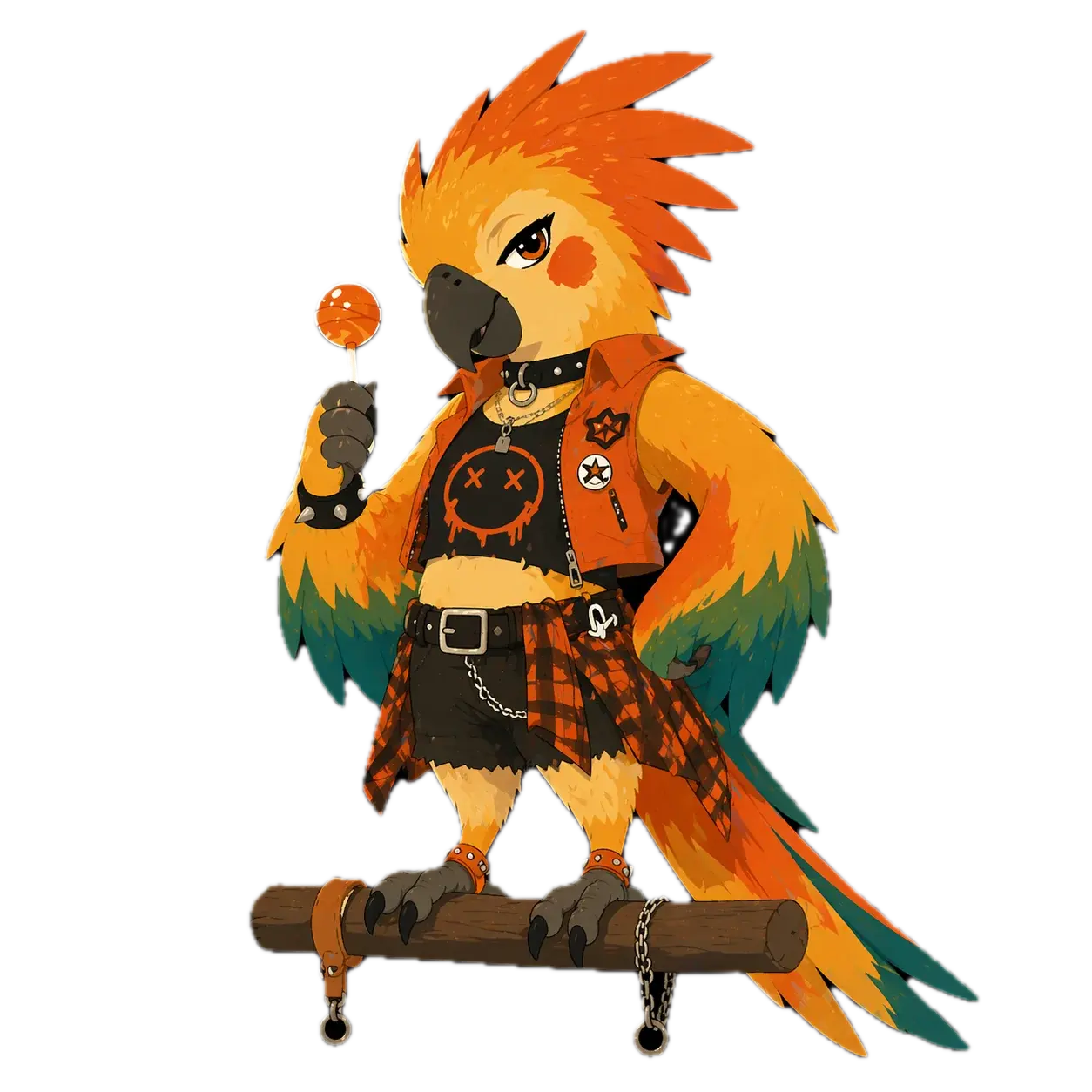
SOMA (Brat Sub) is one of the 16Kinks types, made up of four dimensions: Submissive, Outer, Mind, and Attune. They belong to the scene-Sub (SO) family — rather than settling into a long-term identity, they get lit up in one specific interaction after another. The arousal mode is Attune (MA) — they don't drop in through physical impact or psychological pressure, but through being read and handled by someone who's calibrated to their frequency. SOMA's core trait: they build connection through testing and provocation, and they drop in by being caught — and caught smartly.
Of all 16 types, SOMA might be the easiest to misread. They talk back, dodge, deliberately push things too far — looking like they're fighting authority. But if you watch closely, their eyes are tracking the other person's reactions the whole time. For SOMA, provocation isn't an attack — it's a very specific invitation. Behind every test is the same question: are you going to come catch me?
The Sub Who Reads People Best
SOMA looks like they're acting up — but acting up with that kind of precision takes one thing first: being extremely sensitive to people.
When a SOMA walks into a room, they figure out fast: who's easy to provoke, who'll find it funny, who'll pretend not to care but is already starting to watch them. None of their provocations are random — they're fine-tuned tests. The calculation just runs fast enough to look like instinct.
This perceptiveness is SOMA's most overlooked trait. Most people only see the "bratty" part — they miss the radar running at high speed underneath it. SOMA knows when the other person means it, when they're going through the motions, when they say "stop messing around" but their eyes are saying "keep going." They read these signals — and they read them with precision.
It's also why SOMA often spots the problems in a relationship before their partner does — they just don't usually say it straight out. Instead, they'll use a provocation to test how deep the crack actually goes.
Mind Before Body
As a Mind + Attune type, SOMA's arousal circuit starts in the head.
Pin a SOMA against the wall? They'll probably just roll their eyes. But if the other person looks them in the eye, smiles a little, and says quietly, "are you done performing?" — they freeze. The words on their tongue don't come out. The gear that's been spinning in their head skips a beat.
This doesn't mean SOMA has no body response. It means body sensation needs a psychological "fuse" first — if the head isn't lit up, what happens to the body is just motion, not experience. A line landed just right can keep SOMA buzzing for a whole day, but a physical move with no setup will only pull them out of the scene.
This mind-first tendency shows up just as clearly in everyday life. SOMA is the classic "can't shut their brain off" type — in relationships they're constantly analyzing, interpreting, predicting, sometimes overinterpreting. A partner's reply runs ten minutes late, and SOMA has already written three versions of the story in their head. This isn't paranoia — their cognitive system is just naturally wired toward psychological processing.
Living in Sparks, Not Identity
SOMA belongs to the scene-Sub (Outer) family — and that single fact defines the fundamental difference between them and relational Subs (Inner).
Relational Subs care about "what's my position in this relationship" — titles, belonging, an ongoing sense of identity. SOMA cares about "is this moment electric?" Their kink isn't a continuously running identity system; it's more like an engine that has to be lit up in real time.
This means SOMA might drop in completely during a great scene, but the next morning they're back to work, back to socializing — looking like a totally different person from the one in last night's play. The switch feels natural to SOMA, but for partners — especially relational partners — it can sometimes be confusing: "you were so into it last night, why does today feel like nothing happened?"
It's not that nothing happened. It's that SOMA's kink lives in specific moments, one at a time, more than in a daily identity. Compared to a continuously running dynamic, they're more driven by the experience of being relit over and over again — that doesn't mean SOMA can't enter a 24/7 dynamic, but the path to 24/7 for them is usually a string of peak moments, not a fixed identity framework.
Not Just "Acting Up"
A lot of people, when they first hear "Brat Sub," assume it's just a type that likes to cause trouble. But SOMA's core goes way deeper than that.
Their backtalk has structure — every test is built on a calibration to the other person's frequency. Their "won't-just-obey" has direction — it's not a rejection of all authority, it's a search for the one worth submitting to. Their game has warmth — by the end of play, winning doesn't matter; being caught does.
Take the four letters together: SOMA stands on the responding side (S), comes most alive in real-time interaction (O), drops in through the mind and through language (M), and gets lit up by precision rather than brute force (A). These four dimensions all point to one thing: someone with razor-sharp perception, a brain that never stops turning, who lives in the spark rather than in an identity, and who needs someone clever enough to catch them.
What You Actually Want
SOMA's desire lives in the gaps of the tug-of-war: the chase, the pushback, that suspended "I haven't fully handed myself over yet" feeling — every test fine-tunes the frequency between the two of you, hunting for the tension that's exactly right.
But that's just the surface. What SOMA is actually hooked on is something deeply contradictory: they don't want to be taken down easily, and they crave someone who actually has the ability to take them down.
People who get baited too easily disappoint them — winning that fast just means the other person isn't steady enough. People who rush to dominate them put them on alert — that's not catching me, that's flattening me. People who are too lukewarm leave them feeling like they're performing a one-person show. SOMA's standards for an "opponent" are brutally high — and the heart of those standards isn't "you have to be strong enough." It's: when I'm at my most chaotic, can you still refuse to be thrown off?
That's the biggest difference, at the desire level, between SOMA and the other Sub types.
For a lot of Sub types, the core desire is "to be placed" — to find a position and be set firmly into it. But SOMA doesn't want to be placed. They want something harder: to be caught by someone steadier than themselves, without losing their sense of freedom.
The Moment You Hand Yourself Over
But there's a layer in SOMA's desire that rarely gets talked about: they actually crave submission — real, complete submission.
The chase is the first half of the story. The second half goes like this: when the other person actually breaks through every defense, when SOMA runs out of moves to play, they go through a very specific shift — from constantly moving, constantly talking, constantly acting up, to suddenly going completely still.
This quiet isn't the quiet of being suppressed — it's the relief of finally being allowed to stop moving. Like someone who's been thrashing in water suddenly realizing they're being held up steadily and don't need to fight anymore. In that moment, the wire that's been pulled tight inside SOMA's head actually goes slack.
A lot of SOMAs don't even know how much they crave that moment — because they're so used to the chase part. But ask any SOMA: what do you remember most, the chase itself, or those few seconds of quiet after the chase ends? The answer is almost always the second one.
Not Wanting to Be Liked — Wanting to Be Wanted Whole
At the deepest layer of SOMA's desire is actually a question about self-worth: when I'm not being good, am I still worth wanting?
A lot of people learn one strategy in relationships: behave well, get loved. SOMA's strategy is the exact opposite — they use pushback to test: if I show you the most unlikable version of me, will you still stay?
This isn't being difficult on purpose. This is how SOMA confirms they're actually accepted. They don't want to be loved by someone who got drawn in by the "well-behaved version" of them — because that means the moment the real version shows up, the love could be pulled back. They'd rather lead with the hardest-to-handle parts of themselves right out of the gate, then see who's still willing to stick around.
Hidden Need
They want to be seen through — but not exposed.
To be subdued — but not humiliated.
To be caught — but not owned.
What they really want to confirm is this: when I'm not good, not cooperative, not easy to handle — will you still think I'm worth taking seriously?
Flavor Tags
In the Scene
How You Drop In
You don't drop in right out of the gate. You need a "warm-up phase" — and that warm-up looks like the exact opposite of going along with things.
It might start with a not-very-serious refusal, an obviously deliberate stall, or stepping back the moment they say "come here." This isn't resistance — this is you starting your own engine. You need to feel them get serious — not angry-serious, but the "okay, so you want to play, do you?" kind of serious.
Skipping this phase doesn't sit right with you — it feels like something's missing. Submission without the pull-and-tug isn't submission, to you. It's just going along.
The Moment Your Comeback Dies in Your Mouth
The moment that gets you highest isn't being pushed to your limit, and it isn't being handed pleasure — it's the instant of "I've been completely seen through."
You push their buttons round after round, thinking you can keep going. They don't chase, don't escalate — they just stop biting. They watch you quietly, wait a few seconds. Then they walk over slowly, hand around the back of your neck, lean in close, voice low but with zero room for negotiation: "Done acting up?"
You freeze in that instant. Every comeback you had loaded up goes dead. Not because you've been pinned down — because you've been read. They know exactly how far you took it, when to bring it in, how much pressure to use to bring it in with. That feeling gets you higher than any physical control could — because it proves they aren't just sparring with your surface. They're looking straight at where you actually are.
What Snaps You Out of It Instantly
Three things will cut your wire in an instant:
Actually getting angry. Your provocation is an invitation, not an attack. If they get pissed off and lose control of their emotions, the whole safety container of the game shatters. You aren't looking for an actual fight — you need to know their "chase" has control behind it.
Pure brute force. Skipping the whole mental match and jumping straight to physical restraint. For you, that skips the most important part. Getting held down physically won't make you drop in — it just makes you bored, maybe even insulted: "You think pinning my body counts as winning? You don't even know what I'm thinking."
Giving up. "Whatever, do whatever you want." That's the line you most don't want to hear. For you, them stopping the chase doesn't equal being given freedom — it equals them taking their attention back.
Aftercare
You won't really admit on your own that you need aftercare. After the scene, you might still be laughing, still cracking jokes, looking completely fine. But underneath all that surface, there's a quiet but real question turning over: just now — did you actually enjoy that, or were you just going along with me?
Your aftercare doesn't have to be elaborate. A genuine "that was fun," a relaxed laugh, the signal of "I wasn't putting up with you, I was actually into it" — that's enough. What you most don't want isn't being ignored — it's finding out they were just "humoring" your acting up the whole time.
Kink Tags
SOMA and Their Partner
When the Armor Comes Off
Most of the time you're wearing some pretty good-looking armor: humor, provocation, always looking like you don't quite care. But when a relationship gets deep enough, that armor becomes the problem — because your partner needs to see the person inside.
The first time you express emotion in front of your partner without packaging it — not deflecting with a joke, not going around it with the opposite of what you mean, but actually saying "I'm really hurt" or quietly crying — that moment is scarier to you than any play scene. Because in a scene, there's a role to hide behind. In real vulnerability, there's no role, no exit, just an unmasked you.
But that's also exactly your most intimate moment in a relationship. A partner who has seen you not acting up, not laughing, not performing — and didn't pull back — that person carries a different weight inside you than anyone else.
That said, those moments feel more like unexpected bonuses to you than a daily state you actively chase. You don't make "taking off the armor" a relationship goal — it's just something that happens naturally in moments safe enough to let it.
When the Fight Isn't Play
You're good at manufacturing fake conflict — the kind that has control, a safety container, and ends with the two of you laughing in each other's arms. But real relationships always have real conflict.
The problem: when you face real conflict, your instinct is still to handle it like play. Your partner says, seriously, "when you do that, it really hurts me," and you might come back with a wisecrack trying to drag the mood back. It's not that you don't care — you just don't know how to handle emotion when the protective shell of the game is gone.
Worse: your partner often can't tell when you're acting up vs. when you're actually hurt. Because hurt-you looks almost identical to acting-up-you — same mouthy comebacks, same pushing them away, same "I am not." There's only one difference: when you're acting up, you're watching their reaction. When you're really hurt, you stop watching.
If your partner learns to tell that difference apart, they've got the most important key to a relationship with you.
The Quiet Days
Not every moment is play. Cooking together, each on your own computer, just sitting quietly in the same room — these moments are the most comfortable part of a relationship for a lot of types, but for you, they can sometimes be a little hard.
You're used to confirming connection through interaction. When there's no interaction happening — no push-and-pull, no chase, not even conversation — your brain can start spinning stories: "Are they bored? Do they not want to deal with me? Should I act up a little?"
A mature SOMA learns one thing: quiet doesn't equal disconnected. Your partner sitting silently beside you doesn't mean their care has dropped off — sometimes that's exactly what care looks like in its most ordinary form. But that recognition isn't innate for you. It has to be built up over time.
What's interesting is, once you actually learn to relax into the quiet, you show a softness very few people get to see — not acting up, not performing, just sitting quietly next to someone. The partners who've seen this side usually feel: this is what the complete version of you looks like.
How You Love Someone
SOMA's love isn't direct. They rarely say "I love you," and they're definitely not writing long sentimental monologues. But they have their own ways — you just need to learn how to read them.
A SOMA might deliberately try to make their partner laugh when that partner is feeling low — not because they don't get the sadness, but because "making you laugh" is how they say "it hurts me to see you like this." They'll absentmindedly remember some small thing their partner mentioned in passing, then one day just go and do something about it — no explanation, no taking credit, even pretending it was nothing. The way they take care of people is camouflaged, like they'll lose something the second anyone catches them actually caring.
SOMA's most distinctive way of giving might be this one: when their partner genuinely needs them to be serious, they'll drop all the acting up and become a completely different person — focused, quiet, someone who makes you feel solidly held. The moment is brief, but the partner remembers it for a long time. Because they know: getting a person who's always in motion to stop for you — that itself is a rare kind of expression.
After Trust Is Built
All this testing is, at its core, a signal that trust hasn't fully been built yet. So what happens when the trust really is in place?
A SOMA who fully trusts their partner is a little different from the SOMA everyone else knows. They still act up, but the nature of it shifts — it's no longer about confirming "are you still there," it's purely because it's fun. Testing becomes a game, provocation becomes flirting, pushing away becomes invitation. The difference is there's no anxiety underneath anymore.
This version of SOMA also occasionally shows a kind of directness that catches you off guard. Some day they might suddenly come out with a line that has no defenses up — "you're the person I trust most," or "I just want to be near you today." After saying it they might immediately deflect with a joke to change the subject, but the words are already out. And whoever hears it knows: from someone who's always acting up, a moment of seriousness lands heavier than any sweet talk.
But even at this stage, SOMA's trust still lives more in specific moments than as a constant mode of deep intimacy. They don't switch into a different type just because trust got built — acting up is still the main melody, only now the undertone has shifted from anxiety to certainty.
Send to Your Partner
“There's a pattern of mine you might have noticed: I rarely say what I want directly. I'll talk around it, say the opposite, or just act up and wait for you to guess. I'm not playing you — it's that saying it directly feels too exposed.
If I'm acting up, most of the time I'm not looking for trouble — I'm looking for you. If you can hold it together when I'm at my worst — not get angry, not give up, even laugh and catch me — that means a lot to me.
But you should also know: when I'm actually hurt, it looks a lot like when I'm acting up. The difference is — when I'm acting up, I'm watching your reaction. When I'm really hurt, I stop watching. If you notice I've stopped looking at you — that's when I need you to actually come over.”
How to Bring It Up
One-line version:
“I'm pretty bratty in relationships, but when I'm acting up I'm actually just checking that you're still there.”
On a date:
“I took a kink type test and turned out to be a brat — the kind that gets more into it the more you chase. You might need a little patience and a sense of humor.”
With a long-term partner:
“I've realized I often push buttons instead of saying things directly. I'm not trying to give you a hard time. But if you ever notice I've suddenly stopped acting up and stopped laughing — that's probably when I actually need you.”
Compatibility
Type isn't a matching algorithm. It won't tell you "who you should be with" or "who you can't make it work with."
People are complicated — way more complicated than four letters. And people change — your pattern today doesn't mean you'll always be this way, and the same goes for your partner.
What the analysis below is actually trying to help you do is: see clearly what tends to happen between you and different types, understand where those "how did we get stuck here again" moments actually come from, and know which direction to work in to make the relationship better. It's a mirror, not a verdict.
If your partner isn't in any of the "best match" types below — that absolutely doesn't mean you two won't work. It just means you may need to learn each other's language a little more. And that, in itself, is the most worthwhile thing you can do in a relationship.
Most Natural
DOMATease DomDOMA and SOMA are mirror types: two sides of the same world. Their last three letters are identical (O-M-A), with only the power position flipped — one chases, one runs.
That means the way they drop in is almost identical: both mind-first, both running on language and psychological tension, both preferring precision over brute force. When a SOMA meets a DOMA, you don't need to explain why you act up, why brute force doesn't work, why a single line lands better than a hand — DOMA already knows, because their own arousal circuit runs exactly the same way.
This pairing has a very vivid feel: SOMA pushes buttons, DOMA takes the bait at their own measured pace, and the verbal back-and-forth between them is like a synchronized duet. DOMA doesn't get riled by SOMA acting up — they enjoy the process. To DOMA, SOMA's provocation isn't trouble, it's raw material.
Where's the risk? The two of you might enjoy the chase so much that you stay at the "play" level and never go anywhere deeper. If you've both gotten into the habit of using humor and tension to dodge saying things directly, real intimacy could end up indefinitely postponed.
Most Sparks
DIMASoft DomDIMA and SOMA share the last two letters (M-A) — both mind-first, both relying on precision rather than force. But the second position differs: DIMA is Inner (relational), SOMA is Outer (scene-based).
The early chemistry of this pairing is intense. DIMA won't go toe-to-toe with SOMA the way DOMA does — they'll catch SOMA in a quieter way: not taking the bait, not chasing, just watching very steadily, and then at the peak of SOMA's acting up, pinning them down completely with one feather-light, perfectly precise line. SOMA has almost no defense against this — because DIMA's control doesn't feel like control, it feels more like being read all the way through without a sound.
But over time, the second-position difference surfaces. What DIMA wants is a sustained sense of position in the relationship — "you're mine, not just when we're playing." What SOMA wants is to get lit up again and again. DIMA might feel that SOMA is "barely present" outside of scene; SOMA might feel that DIMA wants to make everything too heavy.
If this pairing can clear that hurdle — DIMA learning to accept that SOMA's kink isn't 24/7, SOMA learning to occasionally give DIMA the relational reassurance they need outside of scene — it can become a very deep combination. Because DIMA's stability is exactly what SOMA most lacks, and SOMA's spark is exactly what DIMA most needs.
Needs Communication
DOBEImpact DomDOBE and SOMA are a perfect complement on the first two letters (D↔S, O=O), but their last two are total opposites: DOBE is Body + Edge, SOMA is Mind + Attune.
Which means: structurally, they fit really well — both scene-type, both caring more about the quality of the moment than about long-term identity. But the language they use to drop in is completely different.
DOBE's instinct is to push through the body — force, impact, physical control. SOMA's instinct is to push through the mind game — language, suspense, getting pinned down with precision. When DOBE wants to handle things with force, SOMA might be thinking "you don't even know what's in my head." When SOMA tries to kick off a scene with verbal provocation, DOBE might be thinking "cut the chatter, get over here."
But if this pair is willing to learn from each other, they open up experiences neither of them imagined. SOMA might discover: heavy physical impact, when it lands after the right psychological setup, can absolutely go straight to your head. DOBE might discover: pinning someone with a sentence before laying a hand on them multiplies the effect several times over.
The key: DOBE needs to learn that SOMA's foreplay starts in the head and can't be skipped. SOMA needs to accept that DOBE's way isn't "crude" — it's just a different channel.
Needs More Work
DIMETrainer DomDIME and SOMA have the biggest gap of any pairing. DIME is Inner + Edge (relational + edge-pushing); SOMA is Outer + Attune (scene-type + precision read). The second and fourth letters are both different — which means the way they organize kink and the pace they push at are both different.
DIME wants a long-term, ongoing, structured relationship — rules, training, gradual shaping. SOMA wants the spark of this moment, the chase right now, the game-feel of starting fresh every time. DIME sets the rules; SOMA's instinct is to break them. DIME will think SOMA isn't serious; SOMA will think DIME is too heavy — "I came to play, not to take a class."
The fourth-letter difference creates friction too: DIME leans Edge, tending to push the experience deeper and further; SOMA leans Attune, wanting precision focus rather than constantly upping the ante. DIME might think SOMA "isn't invested enough"; SOMA might think DIME "isn't listening to my reactions."
But if a DIME learns to enjoy SOMA's chaos — to see it as life in the relationship rather than a threat to order — and a SOMA is willing to occasionally let themselves be placed inside a more lasting framework, this pairing grows into something other combinations can't easily find: SOMA gets someone steady enough that even SOMA can't push them away, and DIME gets someone who will never let the relationship get boring.
Quietly Steadying
DIBACaregiver DomDIBA and SOMA share the last letter (A) — both value precision and getting the read right, both don't rely on extreme pushing. But the first three letters are totally different: D vs S, I vs O, B vs M. Of all eight Dom pairings for SOMA, this is the one with the biggest gap in entry style — and yet, surprisingly, it works.
DIBA is a containing Dom — they don't build authority through volume or impact, but through an almost physical holding that settles you into their rhythm. Nothing flashy on the surface, but stand next to them and you feel the whole room held.
What's strange about this pairing: on the surface, SOMA's provocation and DIBA's quiet seem completely mismatched. SOMA is used to the other side answering back — DOMA answers, DIMA pins them with a sentence, DOBE shoves back hard. But DIBA doesn't answer back. They just stand there watching you act up. The first time SOMA hits this kind of response, they usually push harder, because this "isn't how a Dom is supposed to react."
But after pushing for a while, SOMA will suddenly realize something: this person isn't refusing to engage — they don't need to. DIBA's stability isn't something SOMA's acting up has to prove. It was already there.
This kind of discovery is rare for SOMA. Their whole kink system is built on the cycle of "test — get caught — test again," and DIBA offers a stability that exists without depending on SOMA's acting up. Which might actually be the thing SOMA needs most deeply and admits to the least.
The risk is in the second letter: DIBA is relational, wanting a long-term, continuous sense of being held; SOMA is scene-type, living in sparks. If DIBA expects SOMA to slowly sink into a held relationship structure while SOMA still needs to be lit up fresh every time, DIBA might feel that SOMA "can't settle here."
Whether this pairing works comes down to whether DIBA is willing to understand: SOMA's "can't settle" isn't dislike — their kink simply lives in scenes. If DIBA can give a signal that says "no matter how far you fly, coming back here is steady," SOMA will fly back more willingly than you'd think.
Deepest Psychological Pull
DOMEMind DomDOME and SOMA share two positions: O (scene-oriented) + M (mind-entry). The difference is in the first position (D vs S) and the fourth (E vs A).
Of SOMA's eight Dom pairings, this one carries the highest psychological intensity — possibly even deeper than the mirror DOMA. The reason is simple: both are mind-first people, neither relies on the body to drive a scene, both live in dimensions like language, suspense, and psychological closing-in. When a SOMA meets a DOME, the way they speak, the way they set things up, the way they release pressure — SOMA can see right through all of it at a glance. But seeing through it doesn't mean getting out of it.
DOME's specialty is the long setup. They won't engage with SOMA's usual rapid-sparring style (DOMA-flavored), and they won't pin SOMA down with a single sentence the way DIMA does. DOME drops one seemingly unrelated hook, waits a few minutes, drops a second, waits again — until SOMA suddenly realizes they're already standing in a position carefully laid out for them, and whichever way they move, it's exactly where DOME wanted them to go.
For SOMA, this experience of being slowly woven into the trap is rare. They're used to fast verbal exchanges; what DOME offers is an almost-delayed kind of control — not proving dominance with every sentence, but letting the control finally surface at minute ten. This pacing difference alone is something SOMA rarely encounters, and often stops them in their tracks the first time they meet it.
The risk lives in the fourth-position difference. DOME tilts Edge — wanting to push psychological experience deeper and farther; SOMA tilts Attune — wanting precise focus rather than constant escalation. A DOME might want to push SOMA into deeper and deeper psychological waters — SOMA's response might not be "a little more," but "yeah, this is enough; any deeper isn't what I want." If DOME misses that signal, the scene shifts from peak to crushing.
Whether this pairing lasts comes down to whether DOME is willing to accept that SOMA's "enough" isn't weakness — it's the precise boundary-reading Attune mode produces. SOMA also has to learn to say "enough" earlier — because DOME's default rhythm is to keep escalating.
Same Side, Different Language
DOBABody DomDOBA and SOMA share two positions: O (scene-oriented) + A (precision). The difference is in the first (D vs S) and the third (B vs M).
Structurally, they fit naturally — both live in scenes, neither leans on a long-term identity frame to carry kink, both prefer precision over extremes. The chance of running a scene the first time you meet is much higher than with pairings better suited for long-term relationships.
But once you're in the scene, the two of you are speaking different languages.
DOBA is a body-language Dom — rope, touch, posture, rhythm. They read people through bodily responses; they build control by putting the other person's body into a specific position. A good DOBA can use ten minutes of rope or a series of sensations to tune a sub to a very specific state.
SOMA's entry is entirely on the other side. Their arousal kicks off from the head — a sentence that lands just right, a moment of being seen, a psychological "oh, you've got me" position. Body stuff matters to SOMA, but it needs psychological setup as the fuse — otherwise it's just motion.
So in real life, this pairing tends to produce an interesting phenomenon: DOBA dives into what would otherwise be a killer rope or sensation sequence — technically excellent — and SOMA's verdict is "eh, it's fine." DOBA has no idea what went wrong. The problem isn't the technique — DOBA skipped the psychological fuse SOMA needs — without first pinning SOMA down with words, the body work that follows is just pretty tool operation.
Whether this pairing works comes down to whether DOBA is willing to move the scene's opening from "hands" to "mouth." Once DOBA learns to spend 30 seconds laying down language to grab hold of SOMA's head first, then start the body work they're already good at, the effect is several times what body alone delivers.
SOMA also has to admit: DOBA's body work isn't "crude" — that's how they read people.
Easiest to Wear Each Other Down
DIBEStrict DomBetween DIBE and SOMA, all four letters are different: D vs S, I vs O, B vs M, E vs A. Of SOMA's eight Dom pairings, this one has the largest structural gap — and at the same time is the most iconic in popular BDSM imagination.
DIBE is a rules-based Dom — discipline, follow-through, marks, putting order onto the body. From the outside, DIBE × SOMA looks like the textbook "strict Dom subdues brat" combination. In popular BDSM imagination, this is the most familiar pair: the bratty sub broken in by the strict Dom through discipline.
But in actual practice, this pairing often isn't that story. DIBE wants to shut down SOMA's pushing; SOMA's instinct in front of DIBE's rules is to push back even harder — because for SOMA, pushing buttons is the invitation itself, not behavior that needs shutting down. What DIBE wants to shut down is exactly what SOMA is offering.
The deeper mismatch is in entry mode. DIBE builds authority through the body (impact, restraint, marks); but SOMA's arousal circuit kicks off from the head — what happens to the body, without a psychological fuse, reads to SOMA more like motion than experience. A DIBE-style discipline scene can leave DIBE thinking SOMA "isn't really committing," and leave SOMA thinking DIBE "completely missed what I was doing."
If this pairing is going to hold, DIBE has to trade "shut down SOMA's pushing" for "use SOMA's pushing to corner SOMA" — stop treating brat behavior as a deviation that needs correcting, start treating it as material for the scene itself. At the same time, DIBE has to add a layer of psychological setup before any body work, so the rules aren't just bodily restraints but a pinned-down spot somewhere in SOMA's head.
If those two things don't happen, this pairing falls into a wear-each-other-down loop — the stricter DIBE gets, the brattier SOMA gets; the brattier SOMA gets, the stricter DIBE gets. Nobody loses, but everyone's exhausted.
When Two Subs Are Together
The eight pairings above are all about the chemistry between SOMA and different Dom types. But in real life, relationships between two Subs do exist — and we're not going to pretend otherwise.
Two SOMAs together is a lot of fun, and a lot of mess. Both are waiting for the other to get serious first, both are pushing buttons, both are watching — but nobody's there to take charge. The relationship can be full of sparks but hard to land, unless one of them is willing to switch into the more active position at certain moments.
SOMA with a relational Sub (like SIMA) is a different picture. SIMA wants steady validation and belonging, SOMA wants chase and sparks — both of you are waiting for a Dom to set the frame, but the frame may never just show up on its own. Whether this pairing has legs depends on whether you're both willing to explore together: who leads when, who follows when, whether you can build a rhythm of your own — one that doesn't depend on a fixed Dom.
No relationship shape is "wrong." Some just need more self-awareness and active communication than others.
Mirror Type: DOMA
Tease Dom
In the 16Kinks system, mirror types are two types that flip only the first letter (D/S) — the other three letters are completely identical.
SOMA's mirror is DOMA.
They're two sides of the same world: same way of dropping in, same rhythm, almost the same way of understanding kink — just on opposite sides of the power axis. When SOMA and DOMA meet, the most common reaction is instant recognition — "you're my kind of people." That recognition doesn't need explaining, doesn't need negotiating, it's almost intuitive.
That's why the attraction between mirror types is often the cleanest, fastest kind: you don't need to translate, because you're already speaking the same language.
The best pairings are never decided by type — they come down to whether two people are willing to learn each other's language.
A pairing that "needs more work," if both people are willing to understand each other's logic, can go further than a "most natural" pairing where neither side is willing to budge.
These analyses are a starting point, not an endpoint.
Growth
Growth in Play
A Richer Brat Vocabulary
A lot of SOMA's provocation tactics are actually pretty one-note — eye rolls, talking back, sarcasm, refusing to play along on purpose. These work great early on, but over time, anyone playing with you clocks the whole routine, and the chase loses its tension.
Growth means expanding your bratting vocabulary. Push buttons with body language, not just your mouth — a deliberately half-beat-late movement, a hand that pulls back the moment before it would have submitted, can hit harder than a "no way." Learn to control the pace and intensity of your provocation, dial your frequency to match different Doms' styles — some Doms love a slow-building tug of war, others get off on the sudden, out-of-nowhere counterstrike.
There's another skill a lot of SOMAs overlook: learning how to surrender control gracefully. You know the chase inside out — but what happens after you get caught? A lot of SOMAs are still bracing in the moment they're brought to heel — not because they still want to play, but because they don't know how to switch from "fight mode" to "submit mode." That switch can be practiced. A SOMA who's learned to flow smoothly into submission unlocks a layer of experience that goes deeper than the chase itself.
Seeing Yourself Clearly in the Scene
The thing SOMA is most likely to miss in a scene is the difference between "I'm playing" and "I'm running."
Sometimes SOMA's provocation is part of the play — controlled, conscious, fun. But sometimes, the scene has touched a real insecurity, and SOMA reflexively acts up to protect themselves. The two kinds of provocation look almost identical, but they come from completely different places.
As you grow, you learn to ask yourself mid-scene: am I enjoying this chase right now, or am I using the chase to avoid a deeper kind of surrender? If the answer is the latter — you don't have to force yourself to stop, but at least know what you're doing. Awareness itself is half of growth.
Broaden Your Channels
You know exactly what you like: smart, precise — the kind of person who catches you with their mind. But not every Dom worth trusting works that way.
A body-oriented Dom might not be great at verbal sparring, but the intensely focused quiet they have when they're tying rope — every wrap reading your reactions, every knot landing exactly right — is itself a form of "being seen," just not expressed in words. A high-pressure Dom might not play cat and mouse with you, but the unshakable, steady frame they hold may be exactly the kind of safety you've never experienced before.
You don't need to change your core preferences. But if you can learn to recognize that different styles of Doms each have their own way of "catching" you, your world gets a lot bigger than it is now.
Safe Words: SOMA Needs Them More Than Any Other Type
This needs its own section, because it's about safety.
SOMA's play style is fundamentally about blurring the line between "real refusal" and "fake refusal." "No," "as if," "don't come near me" — for SOMA these can be invitations, but to a partner who doesn't know SOMA, they just sound like refusals.
This means SOMA, more than any other Sub type, needs a clear, absolutely unambiguous safe word system. Because when SOMA actually needs to stop, the everyday "no" has already been spent — without an independent stop signal that both sides have agreed on, your partner has no way to tell which time is play and which time is real.
This isn't optional, it's non-negotiable. A mature SOMA confirms the safe word before any play begins, especially with a new partner. That's not killing the mood — it's exactly what lets you act up as far as you want without worry.
On Short-Term Encounters
Not every SOMA is looking for a long-term partner. Some just enjoy one-off, purely scene-based interactions — parties, events, short-term play partners.
For these SOMAs, the growth direction is different: learning to build a trust foundation faster within a single scene, expressing limits and preferences more clearly, learning to set up a safe chase space quickly with an unfamiliar partner. Because short-term interactions don't get the slow rapport-building time long-term relationships do, a SOMA's communication skills — especially pre-scene negotiation — become even more critical.
A SOMA who's mature in short-term play can take a stranger Dom through a five-minute negotiation and have them fully understand the rules of their game. That's a high-level skill in its own right.
Growth in Relationships
Your biggest default in relationships: testing instead of telling, chasing instead of trusting.
This pattern carries plenty of charm in the early stages of a relationship, but it has a built-in problem: every test starts from zero. Yesterday you confirmed your partner was there for you, but today you're not sure again, so another round of testing. It's not just your partner getting worn out — you're worn out too. The thrill of the chase just covers up the exhaustion.
Your growth direction in relationships: from "will you come catch me?" to "I know you will."
Not that the chase stops — you just don't need it every single time. A SOMA who's growing still acts up — but there's no anxiety behind the acting up anymore. Testing turns into a game. Provocation turns into flirting. Those two kinds of chase look almost identical from outside, but their textures are completely different.
And from a BDSM angle, this kind of trust opens up an experience a SOMA might never have imagined: direct submission, without the chase. A SOMA who fully trusts their partner might one day find themselves giving in inside a scene with zero resistance — no backtalk, no dodging, no waiting to be caught — just quietly, completely handed over. The intensity of that can run deeper than any time you've ever been caught.
But here's a reaction a lot of SOMAs go through: the first time direct submission like this happens, they can get scared. That utterly defenseless state can suddenly leave them not sure who they are anymore — "Is this still me?" Afterward, they might use even fiercer provocation to "get themselves back," pulling that familiar armor back on. If this happens to you: it's normal, and it doesn't mean you've failed. Your system is just recalibrating. Next time will feel more natural.
The bravest version of a SOMA isn't acting up harder — it's choosing not to run inside a scene.
When It Goes Too Far
If a SOMA's default keeps running without any self-awareness, the most common result is this: the people around them slowly stop chasing. Not because they don't care, but because they're worn out. If a SOMA's provocation never once trades for a real, undisguised moment of closeness, the partner eventually starts to wonder: the person I caught — was that them, or just another character?
In actual play, a SOMA without self-awareness runs into a more concrete problem: their provocation gets more and more mechanical. The same moves a hundred times — the partner saw through them long ago, the chase loses its real tension, the whole thing turns into a performance both sides are just phoning in. The SOMA themselves can start to feel hollow too — "I'm acting up, sure, but the rush isn't there anymore."
This isn't saying SOMAs are broken. It's just a mirror: if the chase starts to feel hollow to you, maybe it's time to look at what's outside the chase.
Try This
Next time you're in a scene, try this: once they catch you, don't keep struggling.
Not pinned down so you can't move — actively choosing not to move. Let yourself linger in that "caught" moment a little longer — don't rush to defuse it with a joke, don't rush to kick off the next round of chase. Just stay in that quiet state, a few seconds longer.
Feel what's happening in those few seconds: is your mind slowing down? Does your body feel different from usual? That feeling of not needing to run anymore — is it scary, or is it a relief?
All of SOMA's charm lives in the chase. But the quiet after the chase — that's the place most SOMAs haven't been yet.
Not sure you're SOMA?